
How to Choose the Right Flooring Solution for Commercial Spaces
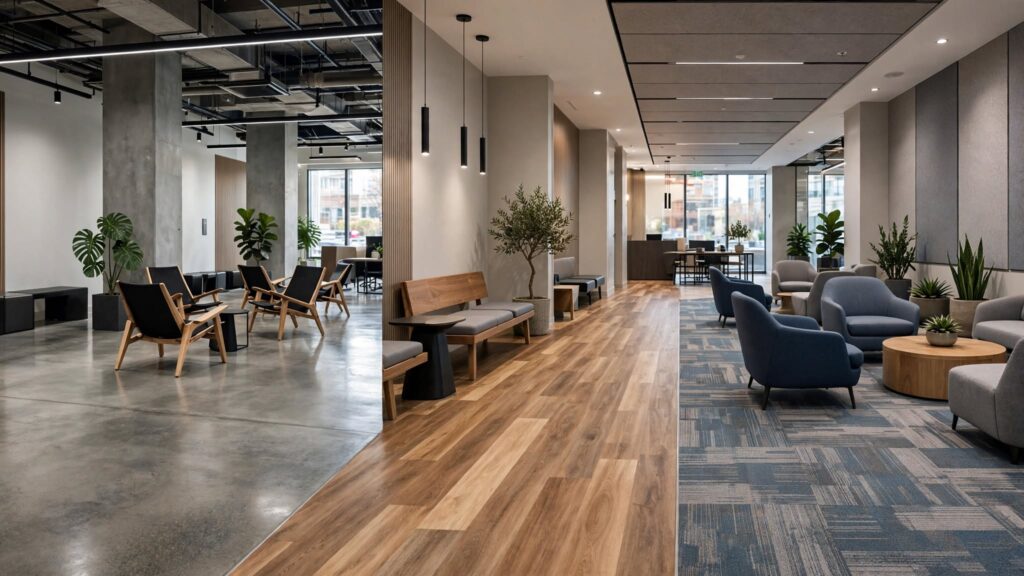
Flooring in a commercial space does far more than complete the appearance of a room. It has to cope with daily foot traffic, furniture movement, cleaning routines, spills, equipment, and the practical demands of the people using the building. A flooring material that works well in a quiet office may be unsuitable for a busy retail store, warehouse, restaurant, or healthcare environment.
Choosing the right flooring solution for commercial spaces therefore requires balancing durability, maintenance, safety, comfort, appearance, and long-term costs. Looking at these factors together can help businesses select a floor that suits both the building and the way it is actually used.
Start With How the Commercial Space Is Used
Before comparing flooring materials, consider what happens in the space throughout a normal working day. Traffic levels, equipment, moisture exposure, cleaning requirements, and furniture movement can all affect flooring performance.
An office reception area, for example, may experience frequent pedestrian traffic but relatively little exposure to chemicals or heavy loads. A workshop may face rolling equipment, dropped tools, dust, and more intensive cleaning. These environments require different flooring characteristics.
It is useful to consider:
Expected level and type of traffic
Exposure to water, dirt, oils, or other substances
Cleaning and maintenance routines
Movement of carts, chairs, machinery, or equipment
Noise and comfort requirements
Desired interior appearance
Defining these conditions first makes it easier to eliminate unsuitable options.
Compare Commercial Flooring Materials
There is no single commercial flooring material that fits every building. Each option has practical advantages and limitations.
Carpet and Carpet Tiles
Carpet can create a softer, quieter environment and is commonly considered for offices, meeting rooms, hotels, and other spaces where acoustic comfort matters.
Carpet tiles provide additional flexibility because individual damaged or stained sections can often be replaced without removing the entire floor. However, carpet generally requires regular cleaning and may be less appropriate in areas frequently exposed to moisture, dirt, or spills.
Vinyl and Resilient Flooring
Commercial vinyl flooring is available in different formats and finishes, making it adaptable to a wide range of interiors. Its relatively easy-to-clean surface can be useful in environments where routine maintenance is an important consideration.
When evaluating resilient flooring, businesses should look beyond appearance. Surface wear, installation method, substrate condition, moisture exposure, and cleaning procedures can all influence long-term performance.
Resin and Industrial Flooring
Industrial and resin-based flooring systems may be appropriate for workshops, production facilities, warehouses, garages, and other demanding environments. Depending on the system, they can provide a continuous surface suited to particular operational or maintenance requirements.
The correct specification matters. The floor needs to be selected according to expected loads, exposure conditions, substrate quality, and how the facility operates rather than simply choosing an industrial-looking finish.
Concrete and Other Hard Flooring
Concrete and hard-surface flooring can suit commercial interiors where durability and straightforward maintenance are priorities. These surfaces may also complement contemporary interior designs.
The trade-off can involve acoustics and underfoot comfort. In spaces where employees stand for extended periods or noise control is important, these factors should form part of the decision.
Evaluate Durability Based on Real Conditions
The word “durable” can be misleading without context. A floor may perform well under pedestrian traffic but be poorly suited to rolling loads, moisture, abrasion, or frequent impacts.
Instead of asking which material is most durable overall, ask what the flooring needs to resist.
For a retail environment, wear from customers, entrances, displays, and cleaning may be the main concern. In a warehouse, load movement and equipment can become more important. Restaurants and similar facilities may need surfaces selected with spills and frequent cleaning in mind.
Matching durability characteristics to actual conditions helps avoid both under-specification and unnecessary expense.
Consider Cleaning and Long-Term Maintenance
Initial appearance should not overshadow maintenance requirements. Commercial floors are used continuously, and keeping them functional and presentable can require considerably different levels of effort depending on the material.
Check what routine cleaning involves, whether specialist equipment or products are needed, and how easily local damage can be repaired. A lower-cost floor that requires difficult maintenance or frequent replacement may not remain economical over its service life.
Maintenance should also match the organisation’s operational reality. A flooring system requiring extensive downtime for routine care may be inconvenient in a facility that operates for long hours.
Examine the Existing Subfloor
A flooring solution is only part of the installation. The condition of the surface underneath it can significantly affect the finished result.
Unevenness, cracks, contamination, residual materials, and moisture-related issues may need to be addressed before new flooring is installed. Some projects may require preparation such as grinding, levelling, repair, or the application of an appropriate base layer.
Ignoring substrate conditions can create problems that are mistakenly blamed on the finished flooring material. For refurbishment projects especially, assessing the existing floor should happen early in the planning process.
Balance Safety, Comfort, and Acoustics
Commercial flooring decisions should also reflect how people move through and work within a space.
Entrance areas, kitchens, workshops, corridors, and other locations may have different slip-risk considerations. Offices and hospitality spaces may place greater emphasis on sound absorption and comfort. Accessibility requirements and transitions between different flooring materials should also be considered during planning.
These needs can sometimes compete. A hard surface may simplify cleaning but contribute to a noisier environment, while a softer material may improve acoustics but demand more maintenance. The right choice depends on which characteristics matter most in each area.
Think in Zones Rather Than Choosing One Floor Everywhere
Large commercial properties do not necessarily need a single flooring material throughout.
A business might use durable hard flooring in entrances and circulation areas, carpet tiles in office zones, and a more specialised flooring system in production or service areas. Dividing the building according to function allows each floor to respond to its specific environment.
At the same time, transitions between materials should be planned carefully so that the overall interior remains practical and visually coherent.
Compare Cost Beyond the Installation Price
Budget matters, but comparing flooring only by the initial material and installation cost can give an incomplete picture.
Consider preparation work, installation complexity, cleaning, maintenance, repair options, operational disruption, and eventual replacement. A material with a higher initial cost may sometimes make sense if it better matches the demands of the space, while an expensive specification can be unnecessary in a lightly used area.
The objective should be appropriate lifecycle value rather than simply choosing the cheapest or most elaborate option.
Conclusion
Choosing the right flooring solution for commercial spaces starts with understanding the environment rather than selecting a material based on appearance alone. Traffic, moisture, equipment, cleaning, substrate condition, acoustics, safety, maintenance, and budget all influence whether a floor is suitable.
Different parts of the same property may also benefit from different flooring systems. By defining operational requirements first and comparing materials against those requirements, businesses can make a more practical flooring decision that supports both everyday use and the overall design of the space.