
How to Plan Vinyl Flooring for Heavy-Traffic Areas
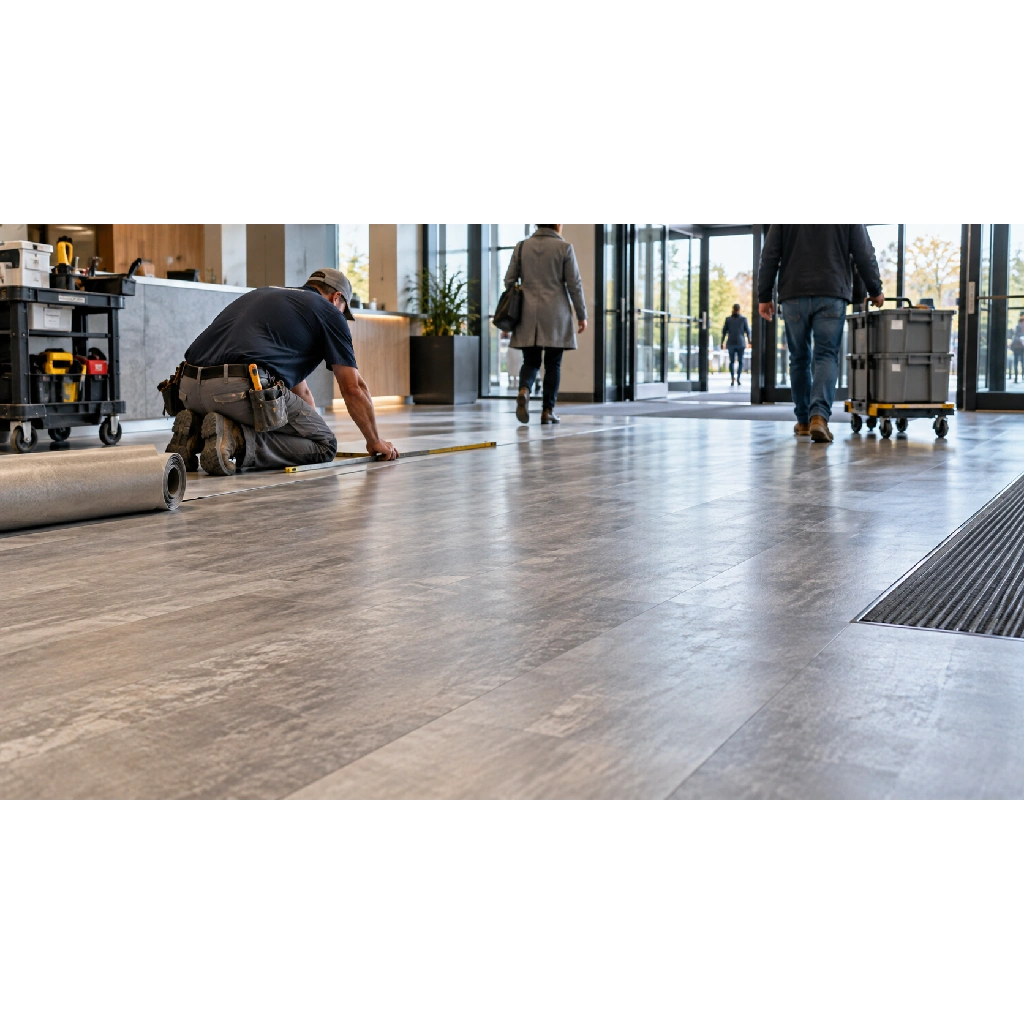
A vinyl floor in a busy entrance has a different job from one in a quiet meeting room. Shoes carry in grit and moisture, while carts, chairs and repeated foot traffic put pressure on the same routes every day. Planning vinyl flooring for heavy-traffic areas starts with those patterns of use. The colour and finish matter, but the floor also needs to suit the loads, cleaning routine and condition of the surface beneath it.
Map the traffic before choosing a product
Walk through the space as it is used, or review how it will be used after opening. Where do people enter, queue and turn? Are cleaning machines or loaded carts likely to cross the floor? Will furniture remain in place or move regularly? The answers help identify where wear and damage are most likely.
Pay particular attention to entrances, lift lobbies, corridors and the routes between work areas. These may need a different specification from adjoining rooms, even when the design is intended to look consistent throughout. Heavy traffic is more than a count of footsteps: narrow wheels, dragged equipment, tracked-in grit and concentrated turning can each affect the floor differently.
For example, a clinic corridor may have steady foot traffic and wheeled equipment, while its nearby waiting room mainly has seated visitors. The two spaces can share a visual scheme, but the corridor needs closer attention to wheel loads, joints, and cleaning access. That distinction is more useful than choosing one product for the entire building solely because it looks suitable in a sample.
Match the vinyl format to the space
Vinyl is available in different constructions and formats. Sheet vinyl covers broad areas with relatively few seams, which can be useful where frequent cleaning is expected. Vinyl tiles and planks, often called LVT, offer design flexibility and allow a damaged piece to be replaced in some installations. The best option depends on the product, its installation method and the demands of the room.
Homogeneous vinyl has material of similar composition through its thickness, while heterogeneous vinyl uses layers that can provide a particular appearance or surface finish. Neither label, by itself, tells you whether a product suits a busy building. Compare products intended for the relevant level of use and check the manufacturer’s guidance on traffic, wheeled loads, cleaning and compatible installation methods.
Consider appearance alongside wear. A very pale or uniformly dark floor may show tracked-in dirt more readily than a patterned mid-tone surface. Texture can affect both the look and how easily the floor is cleaned. If slip resistance is a concern, specify it for the conditions in that space, including whether water or other substances may reach the floor. A textured surface should be assessed with the proposed cleaning method, since dirt can collect in its pattern.
Give the subfloor and joints equal attention
The subfloor is easy to overlook because it disappears once installation is complete. Yet bumps, cracks or movement beneath a resilient covering may remain visible or create problems in use. Before selecting the final system, assess whether the existing base is sound, sufficiently level and suitable for the adhesive or other installation method being considered.
Floor levelling can address uneven areas, but it needs to be planned as part of the build-up rather than treated as a last-minute cosmetic step. Moisture conditions also matter, particularly over concrete. The installer should assess the substrate and follow the chosen flooring system’s requirements before covering it; a floor that appears dry at the surface may still need further evaluation.
Joints deserve careful thought in places that are washed often or crossed by carts. Layout affects where seams fall, how many there are, and how exposed they will be. Sheet products may use welded seams when the specified system calls for them. With tiles or planks, the chosen product and installation details determine how joints perform. In either case, plan transitions at doors and between flooring types so they do not create an awkward edge on a main traffic route.
For more detailed information on this topic, read our guide on Why Carpet Tiles Are a Practical Choice for Offices.
Plan for cleaning, not just installation day
A heavy-use floor needs a cleaning routine that suits both the vinyl and the building. Entrance matting can help limit the grit and moisture carried across the surface, but it must be maintained to remain useful. Check that the proposed floor can be cleaned with the equipment and products the facilities team actually uses.
Ask for the manufacturer’s care guidance before making a final choice. Some products call for particular cleaning agents or methods, and any protective treatment should be understood in terms of its future upkeep. If a space is cleaned frequently, a finish that is difficult to maintain may be a poor choice even if it performs well in a product sample.
Think about repair access, too. In a busy office, replacing an individual tile could be practical if the product and installation allow it. In another setting, a sheet floor with fewer joints may better fit the cleaning requirements. Neither choice removes the need to keep spare material available if matching a repair later will matter.
Bring the decisions together early
Before ordering, record the main traffic routes, likely loads, cleaning methods, subfloor condition and any areas exposed to moisture. Use that brief to compare suitable vinyl products and installation systems, including their preparation and maintenance requirements. It gives the installer a clearer basis for assessing the site and helps prevent appearance from becoming the only deciding factor.
The most effective heavy-traffic floor is a planned combination: an appropriate product, a prepared base, well-placed joints, and a workable care routine. Getting those decisions aligned at the outset makes the finished space easier to use and maintain.